
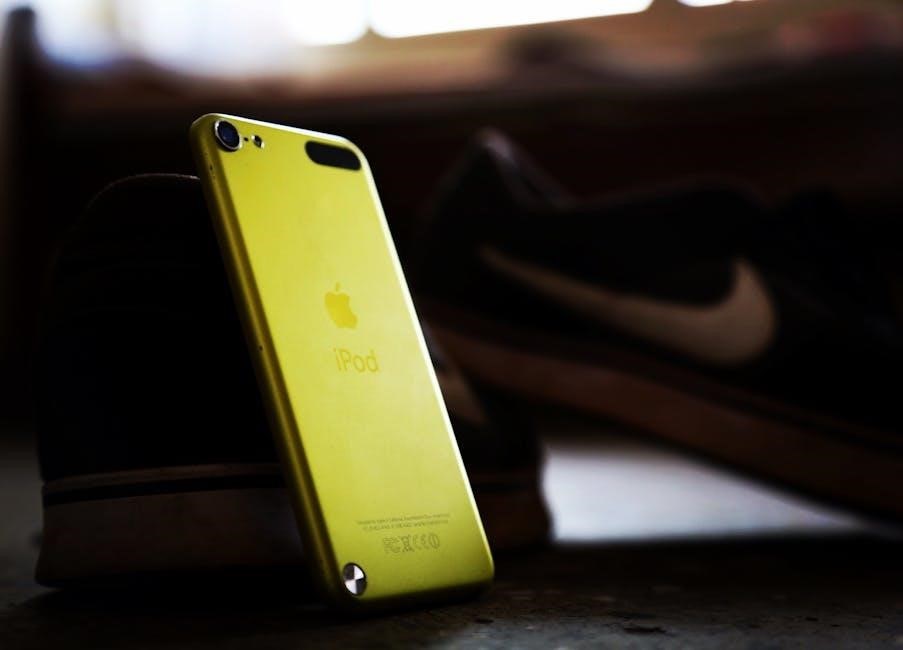
The iPod Shuffle, a compact music player, revolutionized portable listening, offering simplicity and convenience. It captivated users globally for over two decades, impacting how music was enjoyed.
What is the iPod Shuffle?
The iPod Shuffle was Apple’s smallest music player, designed for effortless portability. Introduced in 2005, it distinguished itself with its screenless design and focus on simple, shuffle-based playback. This tiny device held hundreds of songs, making it ideal for workouts or commutes.
It allowed users to “take their music with them on the go,” as Apple stated, and redefined how people experienced music. The Shuffle’s core appeal lay in its ease of use and compact size, offering a streamlined listening experience.
A Brief History of the iPod Shuffle
Launched in January 2005, the iPod Shuffle emerged as a distinct alternative within the iPod family. Over its lifespan, it underwent four generations, each refining its design and functionality. Apple continually enhanced power, capability, and communication features across these iterations.
Despite its eventual discontinuation in 2017, the Shuffle left a lasting impact. It captivated users for over 20 years, demonstrating Apple’s commitment to innovation in portable music. The Shuffle’s legacy continues to influence modern digital audio players.

Unboxing and Contents
Refurbished iPod Shuffles include a one-year warranty, manuals, accessories like Apple EarPods, a new battery, and outer shell, all within a new white box.
What’s Included in the Box?
Upon opening a refurbished iPod Shuffle, you’ll discover a complete package designed to get you listening immediately. This includes the iPod Shuffle itself, ensuring a fully functional and updated device. A crucial component is the comprehensive set of manuals, providing detailed guidance on operation and troubleshooting.
Furthermore, Apple EarPods are included, offering a convenient way to enjoy your music right away. A brand-new battery and outer shell guarantee optimal performance and a fresh aesthetic. Finally, everything is neatly presented in a new, pristine white box, completing the unboxing experience.
Identifying the iPod Shuffle Components
The iPod Shuffle’s design prioritizes simplicity. Key components include the sleek, compact body housing the internal electronics and battery. Notice the prominent clip on the back, designed for secure attachment to clothing or gear. Essential controls are minimal, typically consisting of buttons for playback, volume, and shuffle functions.
The charging port, usually a Lightning connector on later models, is vital for power. Finally, the headphone jack allows connection to your preferred listening devices. Understanding these components is crucial for effective operation.
Getting Started: Basic Operations
Initial setup is straightforward. Connect your iPod Shuffle to a computer to begin syncing music. Power on, and utilize the simple controls for immediate playback enjoyment.
Powering On and Off
To power on your iPod Shuffle, simply press and hold the power button located on the side of the device until the LED indicator light illuminates. This indicates the device is active and ready for use.
Turning the iPod Shuffle off is equally simple: press and hold the same power button until the LED indicator light turns off. This confirms the device has been successfully powered down, conserving battery life when not in use. A quick press won’t turn it off!
Navigating the Controls
The iPod Shuffle features minimal controls for streamlined operation. Utilize the buttons on the top of the device to control playback. One button advances to the next track, while the other rewinds to the previous one.
Volume adjustment is also managed via these buttons; a quick press alters the sound level. These intuitive controls allow for easy music navigation without a screen, focusing on the listening experience.

Connecting to Your Computer
Connect your iPod Shuffle to a computer using a USB cable to sync music and charge the device. iTunes or the Music app facilitates this process.
Syncing with iTunes/Music App
To sync your iPod Shuffle, open iTunes (or the Music app on macOS Catalina and later) and connect the device. Your computer should recognize the iPod. Drag and drop songs or playlists onto the iPod’s icon in iTunes/Music. Alternatively, create or select playlists for syncing.
Ensure your music library is organized. The latest macOS provides the best way to manage and add to your music collection. Synchronization transfers selected content to the iPod Shuffle, making it ready for portable playback. Regularly syncing keeps your music up-to-date.
Charging the iPod Shuffle
Charging your iPod Shuffle is straightforward. Connect the device to a USB port on your computer or a USB power adapter using the provided cable. A full charge typically takes a few hours, providing ample playback time. While charging, the iPod’s indicator light will illuminate.
Refurbished models come with a new battery, ensuring optimal performance. Disconnect the iPod once fully charged to preserve battery health. Regular charging keeps your music readily available on the go.
Music Playback
Enjoying your music on the iPod Shuffle is simple! Create playlists via iTunes or the Music app, then sync them to your device for portable listening pleasure.
Creating and Managing Playlists
To begin, open iTunes or the Music app on your computer. Create a new playlist or modify an existing one by adding your desired songs. Ensure the playlist is synced with your iPod Shuffle to transfer the music. Remember, the Shuffle’s limited storage means careful playlist curation is key! You can organize songs by artist, album, or genre within playlists for easy navigation during playback. Regularly update playlists to keep your listening experience fresh and enjoyable, reflecting your current musical tastes.
Shuffle Play Modes
The iPod Shuffle offers distinct playback experiences. Standard shuffle plays songs in a completely randomized order, perfect for discovering new favorites. Alternatively, you can enable “Shuffle All” within a playlist for broader variety. Some models feature a “Repeat One” function, looping a single track endlessly. Experiment with these modes to tailor your listening sessions. Remember to check your iTunes/Music app settings to confirm your preferred shuffle behavior is correctly applied during synchronization.

Advanced Features
The iPod Shuffle included VoiceOver for accessibility, reading menus and song titles aloud. Equalizer settings allowed users to customize audio preferences for optimal listening.
VoiceOver Functionality
VoiceOver is a crucial accessibility feature on the iPod Shuffle, designed to assist visually impaired users. When enabled, it audibly narrates the interface elements, including menu options, song titles, and playback status.
To activate VoiceOver, a specific button combination is typically used, detailed in the instruction manual. Users navigate by pressing the buttons, and VoiceOver speaks the highlighted item. This allows for independent operation without relying on visual cues, enhancing the user experience for everyone.
Equalizer Settings
Equalizer settings on the iPod Shuffle, though limited compared to more advanced players, allow for some audio customization. The instruction manual details pre-set options designed to enhance different music genres, such as Rock, Pop, or Classical.
These presets adjust the frequency balance, boosting or reducing specific ranges to tailor the sound to your preference. While a fully customizable EQ isn’t available, these options provide a basic level of audio control for a personalized listening experience.

Troubleshooting Common Issues
Common issues with the iPod Shuffle, like recognition problems or battery drain, are addressed in the manual. Solutions include resetting or checking connections.
iPod Shuffle Not Recognizing
If your iPod Shuffle isn’t recognized by your computer, first ensure the connection is secure. Try a different USB port or cable, as faulty hardware can cause issues. Restart both your iPod and computer; this often resolves temporary glitches.
Verify iTunes or the Music app is up-to-date. Sometimes, outdated software struggles with device compatibility. If problems persist, attempt a factory reset – consult the manual for instructions – but remember this erases all data. Finally, check Apple’s support website for specific troubleshooting steps.
Battery Life Problems
Reduced battery life on your iPod Shuffle can stem from several factors. Ensure the device isn’t exposed to extreme temperatures, as this degrades battery performance. Frequent syncing or high volume levels can also drain power faster.
If the battery drains rapidly, a replacement might be necessary, especially for older models. Apple offered refurbished units with new batteries. Check battery health within iTunes/Music app if possible. Avoid leaving the device fully discharged for extended periods.

Maintaining Your iPod Shuffle
Proper care extends the life of your iPod Shuffle. Regularly clean the device with a soft, dry cloth and store it in a safe, protected location.
Cleaning and Care
To ensure longevity, keep your iPod Shuffle clean. Use a soft, lint-free cloth – slightly dampened if needed – to gently wipe the exterior. Avoid abrasive cleaners or excessive moisture, as these can damage the device.
Do not disassemble the iPod Shuffle. This will void any warranty and could lead to malfunction. Regularly check the clip for wear and tear. Store the device in a cool, dry place away from direct sunlight and extreme temperatures when not in use, protecting it from potential damage.
Storage and Handling
Proper storage protects your iPod Shuffle. When not in use, keep it in a protective case or pouch to prevent scratches and dust accumulation. Avoid storing it with sharp objects that could cause physical damage.
Handle with care during transport. Do not expose the device to extreme temperatures or humidity. Avoid dropping or subjecting it to strong impacts. Regularly inspect the clip for any signs of weakening, ensuring secure attachment during activity.
iPod Shuffle Generations: A Comparison
Distinct generations offered varied features. From the original 2005 model to later iterations, each iPod Shuffle evolved in design, capacity, and functionality over time.
First Generation (2005)
The inaugural iPod Shuffle (2005) was a groundbreaking device, remarkably small and boasting a 512MB flash memory capacity. It featured a simple drag-and-drop interface for loading music via USB. Notably, it lacked a screen, relying solely on random playback.
This first-generation model was encased in a white plastic shell and offered up to 120 songs. Its affordability and portability made it instantly popular, establishing the Shuffle as a distinct category within the iPod family, prioritizing ease of use and compact size.
Second Generation (2006)
The second-generation iPod Shuffle (2006) introduced a significant redesign, adopting a sleek, anodized aluminum enclosure available in multiple colors. It doubled the storage capacity to 1GB, holding approximately 240 songs. A key addition was dedicated hardware buttons for volume and playback control, improving usability.
This iteration retained the screenless design, focusing on simplicity. It continued to utilize a USB connection for syncing, maintaining the drag-and-drop functionality. The compact form factor and enhanced controls solidified its position as a popular, user-friendly music player.

The iPod’s Legacy and Discontinuation
The iPod profoundly impacted the music industry, redefining how people discovered, listened to, and shared music for generations of users worldwide.
Impact on the Music Industry
The iPod’s arrival fundamentally altered music consumption. It shifted the industry from physical sales to digital downloads, empowering consumers with unprecedented control over their music libraries. This accessibility fostered a new era of music discovery and personalization.
Furthermore, the iPod spurred innovation in online music stores, most notably iTunes, creating a dominant platform for legal music acquisition. It also influenced artist promotion and distribution strategies, ultimately reshaping the entire musical landscape.
Why the iPod Shuffle Was Discontinued
The iPod Shuffle’s discontinuation stemmed from evolving consumer habits and the rise of smartphones. As mobile phones integrated robust music streaming capabilities, the demand for dedicated music players diminished. Apple focused resources on the iPod touch and, ultimately, streaming services like Apple Music.
Additionally, the Shuffle’s limited features and smaller storage capacity became less appealing compared to more versatile devices. The market shifted, making it unsustainable to continue production.

Alternatives to the iPod Shuffle
Modern digital audio players and streaming services now dominate the portable music landscape, offering vast libraries and convenience, replacing the Shuffle’s niche.
Modern Digital Audio Players
Today’s digital audio players (DAPs) offer a compelling alternative, boasting high-resolution audio support and expandable storage via microSD cards. Brands like Sony, Fiio, and Astell&Kern provide superior sound quality compared to the iPod Shuffle. These players often include features like Bluetooth connectivity, longer battery life, and customizable equalizers.
While lacking the Shuffle’s extreme simplicity, they cater to audiophiles seeking a premium listening experience. Many support various audio formats, ensuring compatibility with extensive music collections. They represent a significant upgrade for those prioritizing sound fidelity.
Streaming Services
Streaming services like Spotify, Apple Music, and Tidal have largely replaced dedicated music players for many users. They offer access to vast music libraries for a monthly subscription, eliminating the need to download and manage files. These platforms provide personalized recommendations and cross-device synchronization.
However, streaming requires a stable internet connection, unlike the iPod Shuffle’s offline playback. While convenient, they don’t offer the same sense of ownership as owning digital music files. Streaming is a dominant force in modern music consumption.