

Historical Context of St. Christopher

Legend says Christopher once carried a child who revealed Christ, linking him to travelers. Early Christians honored him as a protector, placing his image on roads and boats. His feast, celebrated on July 25, reinforced his role as guardian of those journeying far. Pilgrims carried relics across seas.!!.
Legendary Origins and Early Veneration

Early Christian tradition holds that Christopher, a 3rd‑century soldier, carried a child across a river. The child, later revealed as Christ, linked the saint to travelers and safe passage. By the 4th century, the Church honored him as a patron of those journeying by land, sea, or air. His martyrdom under Diocletian is recorded in the hagiography “Acta Sancti Christophori.” The legend spread through Europe, with his image appearing on road signs, ship hulls, and pilgrim itineraries. Pilgrims on the Via Francigena carried small statues, believing his presence shielded them from bandits and hazards. By the 12th century, the Order of St. Christopher was founded in France to protect merchants. His cult reached the Iberian Peninsula, where his iconography was incorporated into Camino de Santiago waymarkers. In Eastern Christianity, 14th‑century icons depict him holding a child on a boat, symbolizing spiritual guidance across turbulent waters. The earliest known depiction of Christopher appears in a 6th‑century mosaic in the Basilica of San Vitale, illustrating him carrying a child across a stylized river. Monastic scribes copied his legend into illuminated manuscripts, spreading his cult among clergy. In the 9th century, the Council of Aachen recognized his feast, encouraging pilgrimages to his shrine in Constantinople. His relics were venerated in the 11th century, attracting pilgrims who sought his intercession before embarking on long voyages. In the Middle Ages, Christopher’s icon was carried by merchants, sailors, and pilgrims alike, and his name became synonymous with safe passage across treacherous roads and seas. His intercession is still invoked by modern travelers, who affix to small statues to car windows or carry wrist‑worn charms for protection.
Patronage of Travelers and Pilgrimage Routes
St. Christopher’s patronage grew as travelers sought protection on perilous roads, sea lanes, and pilgrimage circuits. By the 9th century, his name appeared on the itineraries of the Camino de Santiago, the Via Francigena, and the pilgrimage to Rome. Pilgrims carried small statues or painted his image on their garments, believing his intercession would shield them from bandits, storms, and disease. In medieval Europe, the “Way of St. Christopher” was a recognized route, with roadside shrines erected in his honor. The 12th‑century Order of St. Christopher, founded in France, provided lodging and safe passage for merchants and pilgrims. In the 13th century, the English king Henry III granted Christopher’s shrine in Canterbury a royal charter, encouraging pilgrims to seek his blessing before embarking on long journeys. The 15th‑century maritime guilds in Venice and Genoa included Christopher’s name in their crests, and sailors would pray to him before setting sail. By the 16th century, Christopher’s icon was affixed to ship’s wheelhouses, and the 17th‑century Dutch East India Company included his image in their navigational charts. Even in the 19th century, the French railway company placed small statues of Christopher at train stations, offering travelers a sense of safety. Today, his patronage persists: travelers still affix his image to car windows, carry wrist‑worn charms, and recite the traditional prayer “Dear St. Christopher, protect me today in all my travels.” This enduring tradition underscores his role as a guardian of all who journey, whether by foot, horse, boat, or automobile.
Feast Days and Liturgical Observances
St. Christopher’s primary feast day falls on July 25, a date chosen to honor his martyrdom and the tradition that he carried the Christ child across a river. In the Roman Catholic Church, the day is celebrated with a special Mass, often featuring the reading of the “St. Christopher Hymn” and the distribution of a small wooden cross or a painted icon as a token of protection. The Eastern Orthodox Church observes his feast on the 25th of July as well, but the liturgy emphasizes the “Prayer of St. Christopher” and the chanting of the “Gloria” in his honor; In some Catholic dioceses, the feast is a “Holy Day of Obligation,” requiring parishioners to attend Mass and perform a pilgrimage to a local shrine. The Anglican Communion commemorates the saint on July 25 in the “Book of Common Prayer,” with a reading from the Acts of the Apostles that highlights his role as a protector of travelers. In the 20th century, the Catholic Church added a “Novena to St. Christopher” leading up to his feast, inviting the faithful to pray daily for safe journeys. In the United States, the “St. Christopher Society” organizes a yearly procession through downtown streets, carrying a large statue of the saint and blessing commuters.
The feast is also recognized by the International Association of Pilgrims, who coordinate a global “Day of Safe Travel” on July 25, encouraging travelers worldwide to pray for protection. In many Catholic schools, the day is marked by a “Safety Patrol” program, where students create posters about road safety and recite the traditional prayer. Pilgrims also honor him with blessings.
Devotional Practices and Intercession
Traditional prayers ask St. Christopher to guard travelers, recited before journeys. Pilgrims carry his icon, light candles, and chant “O Saint Christopher, protect me.” Modern devotions blend these with safety checks, ensuring faith and caution coexist!! 🙏✝
Traditional Prayer for Safe Travels
When a traveler sets out, many invoke the intercession of St. Christopher, the patron saint of journeys. The traditional prayer, often whispered before a trip or written on a small card, reads: “O Saint Christopher, guardian of the road, protect me and my companions from all danger. Keep our path clear, guide our steps, and bring us safely to our destination. Amen.” This simple, heartfelt request has been recited for centuries, echoing the legend of Christopher carrying the Christ child across a perilous river. The prayer is not only a plea for physical safety but also a spiritual reminder to carry faith along the way. Many believers place a small icon or a silver coin bearing his image in their vehicle or on their person, believing that the saint’s presence offers comfort and vigilance. In modern times, the prayer is frequently shared on social media, with travelers posting the text before flights, road trips, or pilgrimages, thereby extending the ancient tradition into the digital age. Whether recited quietly in a car seat or loudly at a departure gate, the words serve as a bridge between ancient devotion and contemporary travel, inviting the saint’s guidance into every step of the journey. The practice underscores the enduring belief that faith, coupled with prudence, can safeguard the soul and body alike. Pilgrims and travelers carry a token, like a coin or miniature statue, to remind them of Christopher’s presence. The tradition of reciting this prayer before departure has survived into the 21st century, with daily sharing it on blogs and forums, reinforcing safety.
Contemporary Hymns and Liturgical Texts

In contemporary worship, St. Christopher’s legacy is revived through hymns that blend ancient devotion with modern musical sensibilities. It resonates. These melodies invite believers to trust in divine guidance.
Personal Prayer Rituals and Symbols
Personal prayer rituals for St. Christopher often begin with a brief invocation, asking the saint to guide and protect the traveler. A common practice is to hold a small silver or bronze medal depicting the saint carrying a child, placing it on the chest or in the pocket. The traveler may recite the traditional prayer: “Dear St. Christopher, protect me today in all my travels along the roads…” while gently touching the medal. Some believers add a candle to the ritual, lighting it as a symbol of the saint’s luminous guidance. Others use a small stone or a piece of river water, recalling the legend of the saint carrying a child across a river, to remind them of the journey’s physical and spiritual aspects. In addition, many people write a short note on a piece of paper, listing their destination and any concerns, and then fold it into a small envelope, placing it under the pillow or in the car’s glove compartment. This tangible act of faith serves as a reminder that the saint’s intercession is present even in the quiet moments of travel. Finally, before departure, the traveler may whisper a personal intention, such as “May I arrive safely and with gratitude,” and then close the eyes, feeling the presence of the saint’s protective embrace. This ritual blends ancient tradition with contemporary mindfulness, allowing the faithful to carry the saint’s guidance into every journey, whether a brief commute or a long pilgrimage. Pilgrims keep a charm of a boat or road sign, marking their path.and Modern travelers jot a brief prayer in a travel journal before departure.
Integration with Modern Travel Safety Practices
While technology offers GPS, seat‑belts, and real‑time traffic alerts, many travelers still turn to St. Christopher for spiritual reassurance. A common practice is to attach a small medal to a seat‑belt or place it in a car’s glove compartment, merging faith with physical safety. Before departure, drivers recite the traditional prayer, “Dear St. Christopher, protect me today in all my travels along the roads,” while checking mirrors and ensuring seat‑belts are fastened. Pilgrims use the saint’s image on travel itineraries, marking each checkpoint as a moment of divine protection; In long‑haul flights, passengers hold a tiny relic while the flight crew follows standard safety briefings. The combination of modern protocols—such as wearing masks, using seat‑belt reminders, and following traffic laws—creates a holistic approach to travel safety. Travelers also share digital prayer cards on social media, encouraging others to combine prayer and practical precautions. By integrating the ancient patron’s guidance with contemporary safety measures, believers find comfort that both the body and spirit are safeguarded during every journey. Many online communities post short videos of people placing a St. Christopher charm in their luggage before a trip, then narrating a brief prayer. Some airlines even display a small icon of the saint on safety cards, reminding passengers of divine protection. In addition, travelers often use a phone app that offers a daily reminder to say the prayer, synchronizing faith with the routine of checking seat‑belts, scanning QR codes for safety instructions, and keeping a travel journal.

Cultural Representation and Influence

St. Christopher appears in medieval manuscripts, churches, and modern media, symbolizing safe travel. Artists depict him carrying a child, while films and books reference his patronage, blending faith with popular culture. His legacy appears in travel apps, reminding!
Iconography in Religious Art and Architecture
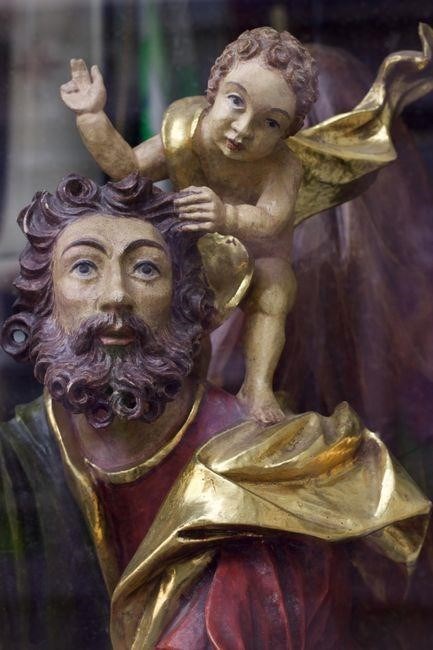
St. Christopher is most commonly portrayed as a robust, often bearded figure carrying a child across a river. The child, later revealed as Christ, is depicted in a radiant, serene pose. Artists emphasize the saint’s muscular build, symbolizing strength and endurance. In medieval manuscripts, he is shown holding a staff or a cross, while in frescoes he is frequently placed near water, underscoring his role as a protector of travelers. The iconography often includes a boat or a bridge, suggesting safe passage. In Eastern Orthodox tradition, his image is rendered in gold leaf, with a halo, and he is sometimes depicted in a blue tunic. Western depictions vary, but the central motif remains the child on his back, a testament to his patronage of safe journeys. Modern churches incorporate his likeness in stained‑glass windows, and his statue is commonly found at the entrances of pilgrimage routes, reminding travelers of divine guidance. In churches across Europe, the saint’s image is often flanked by symbols of protection, such as keys or small boats, reinforcing his guardianship over the journey. Pilgrims often carry small statues or tablets of St. Christopher as talismans, believing that his presence offers moral strength and divine protection during long voyages. In the 19th century, the saint’s image was incorporated into ship’s logs and travel journals, often accompanied by a brief prayer for safe passage. Today, digital icons of St. Christopher appear on travel apps and GPS devices, symbolizing a modern fusion of faith and technology. Blessings.

Artistic Depictions in Medieval Manuscripts
In illuminated manuscripts of the 12th and 13th centuries, St. Christopher appears in vibrant smallpanels that accompany pilgrim itineraries. Artists rendered him as a towering, muscular figure, often in a blue tunic, bearing a child who is subtly illuminated to suggest the divine. The child’s face is serene, while the saint’s expression conveys determination. The river scene is detailed with rippling water, reeds, and distant cliffs, creating a sense of motion. The use of gold leaf on the saint’s halo and the background underscores his sanctity. In the Book of Hours, for example, Christopher is depicted at a crossroads, symbolizing choice and direction. The manuscripts often include marginalia with prayers for safe travel, linking visual art to devotional practice. The iconography reflects the medieval belief that visual representations could invoke divine protection. The manuscripts were hand‑copied by monks, who added personalized prayers, making each copy a unique talisman. The depiction of Christopher’s arm as a sturdy support for the child illustrates the theme of human strength aiding divine mission. The manuscripts also show him in a boat, a motif that reinforces his role as guardian of those crossing waters; These artistic choices highlight the medieval synthesis of faith, art, and the practical concerns of travelers.
These manuscripts, illuminated with gold and vivid colors, served as devotional aids and practical guides, offering travelers encouragement a sense of divine and presence.

Media Portrayals and Popular Culture References
St. Christopher’s image has migrated from church walls to mainstream media, appearing in films, television, and video games. In the 1990s, a low‑budget horror movie titled “The Saint” used Christopher’s iconography to create a cursed relic that transports characters across time. Television series such as Supernatural featured a brief cameo where a protagonist consults a carved statue of the saint for safe passage through a demon‑infested road. Video game designers incorporated a “Christopher’s Blessing” item in role‑playing titles, granting characters temporary invincibility while traveling. The saint’s presence in popular culture often emphasizes protection, guidance, and the human desire to seek safety beyond the physical realm. These portrayals reflect a modern reinterpretation of an ancient patron, bridging faith with entertainment and marketing.
Literary references also surface; the 2007 novel Crossing the River uses Christopher as a metaphor for the protagonist’s spiritual journey. In music, a 2018 folk‑rock track titled “Carry Me” samples a Gregorian chant of St. Christopher, blending ancient liturgy with contemporary rhythms. Social media influencers have posted short clips of them placing a small bronze statue on their car dash, claiming it brings calm during long commutes. These modern adaptations illustrate how the saint’s legacy continues to inspire creative expression across diverse media.