
Siemens iQ300 Washing Machine User Manual: A Comprehensive Guide
This manual details safe operation‚ installation‚ and maintenance of your Siemens iQ300 washing machine‚ addressing potential issues and providing troubleshooting guidance.
Welcome to the world of efficient and intelligent laundry care with your Siemens iQ300 washing machine! This appliance is designed to deliver exceptional cleaning performance while prioritizing energy efficiency and fabric care. This user manual serves as a comprehensive guide‚ equipping you with all the necessary information to operate and maintain your washing machine effectively.
The Siemens iQ300 series incorporates innovative technologies to simplify your laundry routine. From specialized programmes for delicate fabrics to quick wash options for busy lifestyles‚ this machine adapts to your needs. Understanding its features and following the guidelines within this manual will ensure optimal performance and longevity; We’ll cover everything from initial setup to troubleshooting common issues‚ ensuring a seamless laundry experience.
Safety Precautions & Important Warnings
Prioritizing safety is crucial when operating your Siemens iQ300 washing machine. Always ensure the appliance is properly grounded and connected to a compatible electrical supply. Never attempt to repair the machine yourself; contact qualified service personnel for any maintenance or repairs.
Keep children and pets away from the washing machine during operation. Do not open the door while a programme is running. Avoid contact with water inside the drum‚ especially if detergent residue is present. Disconnect the power supply before cleaning or performing any maintenance. Read all warnings and instructions carefully before use to prevent potential hazards and ensure safe operation of your appliance.
Installation & Setup
Proper installation ensures optimal performance and longevity of your Siemens iQ300. This section guides you through unpacking‚ connections‚ and leveling procedures.
Unpacking and Initial Inspection
Carefully unpack your Siemens iQ300 washing machine‚ removing all packaging materials‚ including transport bolts and polystyrene inserts. These are crucial for safe transit and must be removed before operation to prevent damage. Inspect the appliance thoroughly for any visible signs of damage incurred during shipping – dents‚ scratches‚ or broken parts.
Retain the packaging for potential future transport or warranty claims. Verify that all included accessories‚ such as the water inlet hose‚ drain hose‚ and any provided tools‚ are present. Report any damage or missing components to the retailer immediately. Ensure the model number and serial number on the appliance match those on your purchase receipt and warranty documentation.
Connecting to Water Supply
Before connecting‚ ensure the water supply is turned off. Attach the supplied inlet hose to the washing machine’s inlet valve‚ tightening securely by hand – avoid using tools to prevent damage. Connect the other end of the hose to a cold water tap with a ¾ inch thread.
Use only the supplied inlet hose; do not reuse old hoses. Check the hose connections for leaks after turning the water supply back on slowly. If leaks persist‚ re-tighten the connections. Ensure the water pressure is within the specified range (typically 10-100 kPa). For optimal performance‚ avoid excessively long or kinked hoses.
Electrical Connection & Power Requirements
The Siemens iQ300 washing machine requires a grounded 220-240V AC power supply‚ 50Hz. Before connecting‚ verify your electrical system meets these requirements. Do not use extension cords or adapters. Connect the appliance directly to a properly installed and grounded wall socket.
Ensure the fuse rating is appropriate for the machine’s power consumption (typically 10-16 Amps). Incorrect voltage or frequency can damage the appliance. If you are unsure about your electrical installation‚ consult a qualified electrician. Always disconnect the power supply before any maintenance or cleaning procedures.
Leveling the Washing Machine
Proper leveling is crucial for stable and quiet operation of your Siemens iQ300 washing machine. Use a spirit level to check the machine’s stability on the floor. Adjust the adjustable feet at the bottom of the appliance until it is perfectly level in both directions – side-to-side and front-to-back.
Lock the feet in place after adjustment to prevent movement during the wash cycle. An unleveled machine can experience excessive vibration‚ noise‚ and potential damage. Regularly check the leveling‚ especially after moving the appliance. A stable base also ensures optimal water drainage and spin performance.
Operating Your iQ300 Washing Machine
Understand the control panel‚ laundry loading‚ detergent usage‚ and programme selection for efficient washing. Learn to start‚ pause‚ and cancel cycles easily.
Control Panel Overview & Symbols
The Siemens iQ300 washing machine’s control panel features a user-friendly interface. A central dial selects wash programmes – Cotton‚ Delicates‚ Wool‚ Quick Wash‚ and Eco‚ among others. LED indicators display the selected programme‚ remaining time‚ and any active special functions.
Buttons activate options like temperature adjustment‚ spin speed modification‚ and pre-wash. Symbols clearly represent each function; a snowflake indicates cold wash‚ a shoe signifies a special shoe programme‚ and a clock denotes delay start. The ‘Start/Pause’ button initiates or interrupts the washing cycle. Error codes are displayed via illuminated symbols‚ prompting users to consult the troubleshooting section of this manual for resolution. Familiarizing yourself with these symbols ensures optimal machine operation.
Loading Laundry Correctly
Proper laundry loading is crucial for optimal washing performance and to prevent damage to your clothes and the machine. Avoid overloading the drum; consult the programme guide for recommended load capacities – typically indicated in kilograms. Distribute items evenly within the drum to maintain balance during the spin cycle‚ preventing excessive vibration.
Small items should be placed inside a wash bag to prevent them from getting lodged in the drum or drain pump. Close zippers and fasten hooks to avoid snagging other garments. Empty pockets of all objects‚ including coins and keys. Do not wash items that have contained flammable liquids or chemicals without prior cleaning.
Detergent Dispenser: Types & Usage
The Siemens iQ300 washing machine features a multi-compartment detergent dispenser. Typically‚ compartment I is for pre-wash detergent‚ compartment II for main wash detergent (powder or liquid)‚ and a separate compartment‚ often marked with a flower symbol‚ for fabric softener. Always use the correct type of detergent – powder‚ liquid‚ or pods – as recommended by the detergent manufacturer and the washing machine’s programme guide.
Do not exceed the maximum fill level indicated in each compartment. Overfilling can lead to detergent residue and reduced washing performance. For liquid detergents‚ use the marked level. Ensure the dispenser is clean to prevent blockages and ensure accurate dispensing.
Programme Selection Guide
The Siemens iQ300 offers a variety of programmes tailored to different fabric types and soiling levels. Common programmes include Cotton‚ Delicates/Silk‚ Wool‚ Quick Wash/Express‚ and Eco. The Cotton programme is ideal for everyday laundry‚ while Delicates/Silk provides gentle care for sensitive fabrics. Use the Wool programme specifically for woollen garments to prevent shrinkage.
The Quick Wash/Express programme offers a shorter wash cycle for lightly soiled items. The Eco programme maximizes energy efficiency. Refer to the programme overview in the control panel and this manual for detailed settings‚ temperature recommendations‚ and suitable load capacities for each programme.
Starting‚ Pausing & Cancelling a Programme
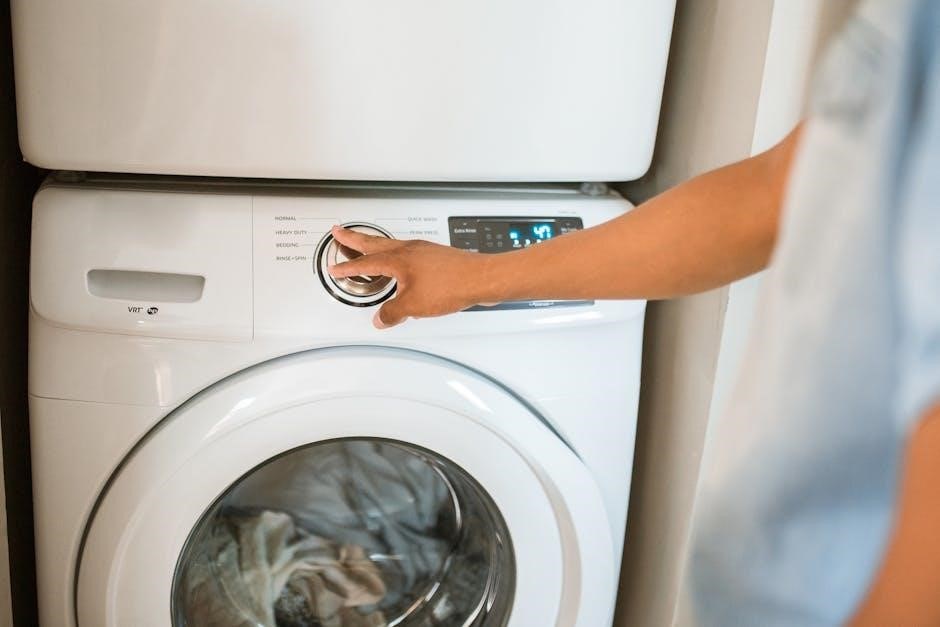
To start a programme‚ ensure the door is securely closed and press the ‘Start/Pause’ button. The machine will automatically lock the door during operation. To pause a running programme‚ press the ‘Start/Pause’ button again; the programme will halt‚ allowing you to add or remove items if needed.
To cancel a programme mid-cycle‚ press and hold the ‘Start/Pause’ button for approximately three seconds. The machine will drain the water and spin to remove excess moisture before stopping completely. Note that cancelling a programme may take several minutes to complete. Always wait for the machine to fully stop before opening the door.
Specific Programmes & Features
Explore tailored wash cycles like Cotton‚ Delicates‚ Wool‚ Quick Wash‚ and Eco Programme‚ optimizing cleaning performance and energy efficiency for various fabrics.
Cotton Programme: Settings & Recommendations
The Cotton programme is ideal for robust‚ everyday laundry items like t-shirts‚ bed linen‚ and towels. For normally soiled cottons‚ use the standard setting with a temperature of 40°C or 60°C. Heavily soiled items benefit from pre-washing and a higher temperature – up to 90°C‚ if the fabric allows.
Adjust the spin speed according to the fabric type; lower speeds are gentler on delicate cottons‚ while higher speeds extract more water‚ reducing drying time. Consider using a liquid detergent for better dissolution and to avoid residue. Always check the care label of your garments before selecting a programme and temperature. Overloading the machine can reduce washing effectiveness‚ so adhere to the recommended load capacity.
Delicates/Silk Programme: Gentle Washing
The Delicates/Silk programme is specifically designed for sensitive fabrics requiring extra care‚ such as lingerie‚ silk blouses‚ and sheer curtains. This programme utilizes a reduced drum action and lower spin speeds to minimize stretching and damage; Always use a mild detergent formulated for delicates; harsh chemicals can ruin these fabrics.
We recommend placing delicate items inside a laundry bag to provide additional protection during the wash cycle. A water temperature of 30°C or lower is crucial to prevent shrinking or color fading. Avoid overloading the machine‚ as this can compromise the gentle washing action. Do not use fabric softener with silk‚ as it can leave residue.
Wool Programme: Caring for Woollen Garments
The Wool programme on your Siemens iQ300 is engineered to gently clean woollen items‚ preventing shrinkage and maintaining their natural softness. This programme employs a very gentle drum action and strictly controlled water temperature – typically around 30°C – to protect the delicate wool fibers. Always use a detergent specifically designed for woollens‚ as regular detergents can damage the fabric.
Before washing‚ check the garment’s care label; some wool items are ‘hand wash only’; Avoid overloading the machine to ensure proper cleaning and rinsing. Do not use fabric softener as it can coat the wool fibers and reduce their breathability. After washing‚ reshape the garments and lay them flat to dry‚ avoiding direct sunlight or heat.
Quick Wash/Express Wash Programme
The Quick Wash or Express Wash programme on your Siemens iQ300 is ideal for lightly soiled laundry that needs a refresh. This programme significantly reduces wash cycle time – typically completing a load in under 30 minutes – while still delivering effective cleaning. It’s perfect for smaller loads or items worn briefly.
Use a reduced amount of detergent appropriate for a shorter cycle and lighter soil level. While convenient‚ remember this programme isn’t suitable for heavily soiled items or delicate fabrics requiring a more thorough wash. Avoid overloading the machine to ensure optimal cleaning performance. Select this programme when time is limited and a full wash cycle isn’t necessary.
Eco Programme: Energy Saving Tips
The Eco programme on your Siemens iQ300 washing machine is designed to minimize water and energy consumption‚ offering an environmentally friendly washing solution. This programme typically uses lower temperatures and extended wash times to achieve optimal cleaning efficiency. To maximize energy savings‚ always wash full loads whenever possible‚ as running partially filled machines wastes resources.
Utilize the recommended detergent dosage for Eco programmes‚ avoiding overuse. Consider washing at off-peak electricity hours if your energy provider offers time-of-use rates. Regularly cleaning the filter and detergent dispenser also contributes to efficient operation. Selecting the Eco programme is a simple yet effective way to reduce your environmental impact and lower utility bills.
Troubleshooting Common Issues
This section addresses frequent problems like programme interruptions‚ drainage difficulties‚ door locking issues‚ and deciphering error codes for your Siemens iQ300.
Unexpected Programme End
An unexpected programme end can occur due to several reasons. First‚ check the power supply to ensure it hasn’t been interrupted – a brief power outage can halt the cycle. Secondly‚ examine the water supply; insufficient water pressure might trigger a safety stop.
Also‚ verify the drain hose isn’t kinked or blocked‚ preventing proper water removal. Overloading the machine or an unbalanced load can also cause the cycle to terminate prematurely. If the issue persists‚ consult the error code displayed (if any) and refer to the ‘Error Codes & Their Meanings’ section for specific guidance. Finally‚ ensure the door is securely closed‚ as a loose door can interrupt operation.
Water Drainage Problems
If your Siemens iQ300 isn’t draining properly‚ several factors could be at play. Initially‚ inspect the drain hose for any kinks‚ bends‚ or obstructions that might be restricting water flow. Ensure the hose isn’t inserted too far into the drainpipe‚ as this can also cause siphoning issues.
Crucially‚ check the washing machine’s filter (refer to the ‘Filter Cleaning’ section) for lint‚ debris‚ or small objects that may be blocking the pump. A clogged filter is a common cause of drainage problems. If the filter is clear‚ the drain pump itself might be faulty and require professional attention. Avoid running the machine until the drainage issue is resolved.
Door Cannot Be Opened
Encountering a locked door on your Siemens iQ300 is a common concern‚ usually a safety feature. The door remains locked during operation and for a short period after the cycle completes to prevent accidental opening while water remains inside.
First‚ ensure the washing cycle has fully finished. If the cycle is still running‚ or has recently ended‚ wait a few minutes for the door lock to release automatically. If it still won’t open‚ try briefly pressing the ‘Start/Pause’ button. If this fails‚ a potential issue with the door lock mechanism or the control module may exist‚ requiring professional service. Do not force the door open.
Error Codes & Their Meanings
Your Siemens iQ300 washing machine utilizes error codes to diagnose potential problems. These codes appear on the display panel‚ indicating specific malfunctions. For example‚ a code relating to water supply suggests an issue with the water inlet valve or pressure. Drainage errors point to a blocked filter or pump.
Consult the complete error code list in this manual (or the separate documentation provided) to accurately identify the issue. Often‚ simple solutions like checking the water hose or cleaning the filter can resolve the problem. However‚ some codes indicate more serious internal faults requiring a qualified technician’s attention. Never attempt repairs yourself if unsure.
Maintenance & Cleaning
Regular cleaning extends your Siemens iQ300’s lifespan and ensures optimal performance. This section details procedures for the dispenser‚ drum‚ filter‚ and descaling.
Cleaning the Detergent Dispenser
The detergent dispenser requires regular cleaning to prevent residue buildup and ensure optimal detergent distribution. It’s recommended to clean it every 20 washes‚ or more frequently if using liquid detergent or powder with additives.
First‚ locate the detergent dispenser drawer – usually at the top of the machine. Most models have a release button or lever; press it to remove the drawer completely.
Separate the individual compartments within the drawer. Rinse each compartment thoroughly under warm running water‚ using a soft brush to remove any lingering detergent residue. Pay close attention to the fabric softener compartment‚ as this is prone to clogging.
Ensure all compartments are completely dry before reassembling and inserting the drawer back into the washing machine. A clean dispenser guarantees efficient detergent usage and prevents potential issues with wash results.
Cleaning the Drum & Seals
Maintaining a clean drum and seals is crucial for hygiene and preventing unpleasant odors; Regularly wipe the drum interior with a damp cloth after each wash cycle‚ especially after washing at low temperatures.
For a more thorough clean‚ run an empty wash cycle at a high temperature (90°C) with a washing machine cleaner‚ following the product’s instructions. This helps remove accumulated dirt‚ detergent residue‚ and bacteria.
Pay close attention to the rubber door seal. Wipe it down after each wash to remove any moisture or debris. Inspect the folds for mold or mildew‚ and clean with a solution of water and white vinegar if necessary. A clean seal prevents leaks and maintains the machine’s efficiency.
Filter Cleaning: Location & Procedure
The filter prevents objects from damaging the drain pump. Its location is typically a small access panel at the front‚ bottom-right of the washing machine. Before cleaning‚ ensure the machine is switched off and unplugged.
Place a shallow container and towels nearby to catch any spilled water. Carefully open the access panel and unscrew the filter cap – it may contain residual water. Remove any lint‚ coins‚ or other debris from the filter housing and impeller area.
Rinse the filter thoroughly under running water. Reinsert the filter‚ ensuring it’s securely tightened. Close the access panel. Regular filter cleaning (every 1-2 months) ensures optimal drainage and prevents potential issues.
Descaling the Washing Machine
Over time‚ limescale can build up inside your Siemens iQ300‚ reducing efficiency and potentially damaging components. Descaling is recommended if you live in a hard water area‚ or approximately every 6-12 months.
Use a commercially available washing machine descaler‚ following the product’s instructions carefully. Typically‚ this involves pouring the descaler into the detergent dispenser and running a hot wash cycle (usually 60°C) without any laundry.
For optimal results‚ run an additional rinse cycle afterward to remove any remaining descaler residue. Regular descaling helps maintain performance and prolongs the lifespan of your appliance.